My Agents Are Building a Game World
Early experiments in generating a game’s world.
I’m building Rowan, a single-player fantasy RPG, with coding agents. I want the painted look and memorable places of the older online games I’ve spent years playing. We’re early in figuring out how to generate its world and assets.
The agents turn structured descriptions into terrain, objects and places. This part of the build focuses on generating textures that fit together across that world.
Choosing the look
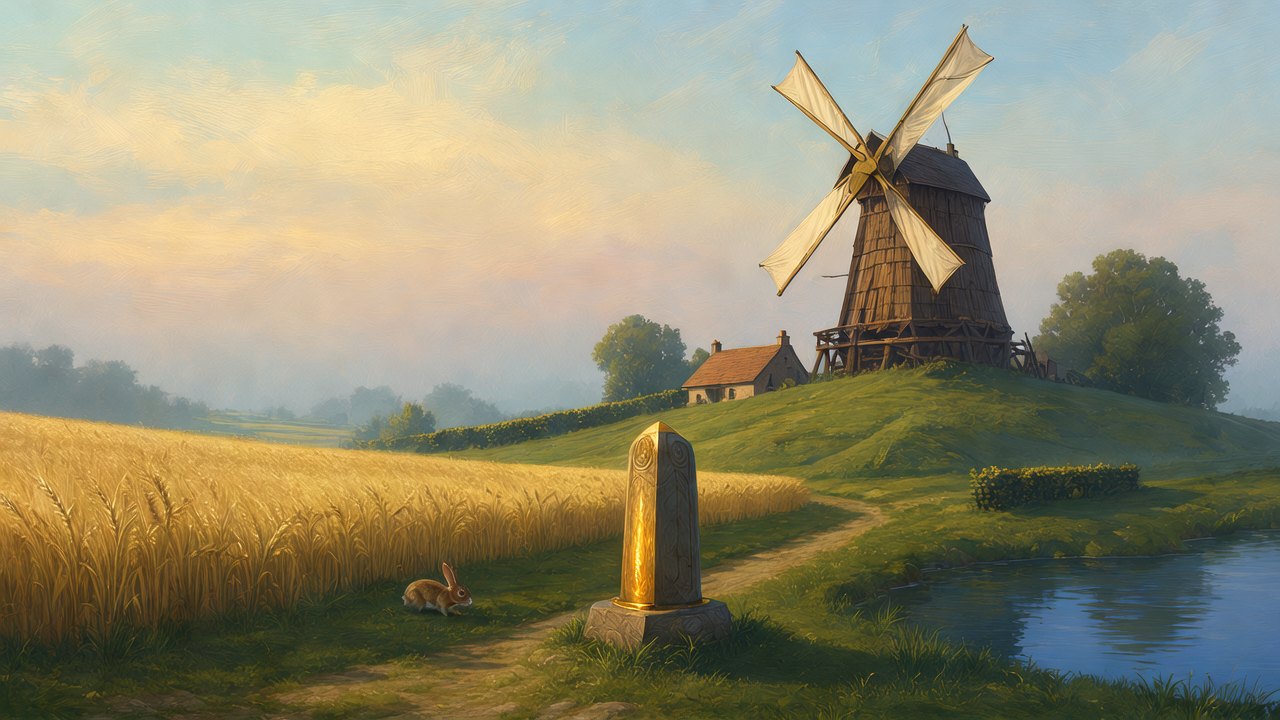
Rowan needs a consistent look across its buildings, terrain and creatures. Each region should have its own character while still belonging to the same world.
I chose Cosmos3 over FLUX.2 klein for the look of its generated textures. The material pipeline needs to preserve that style as the library grows and give the game-building agent clear rules for applying it.
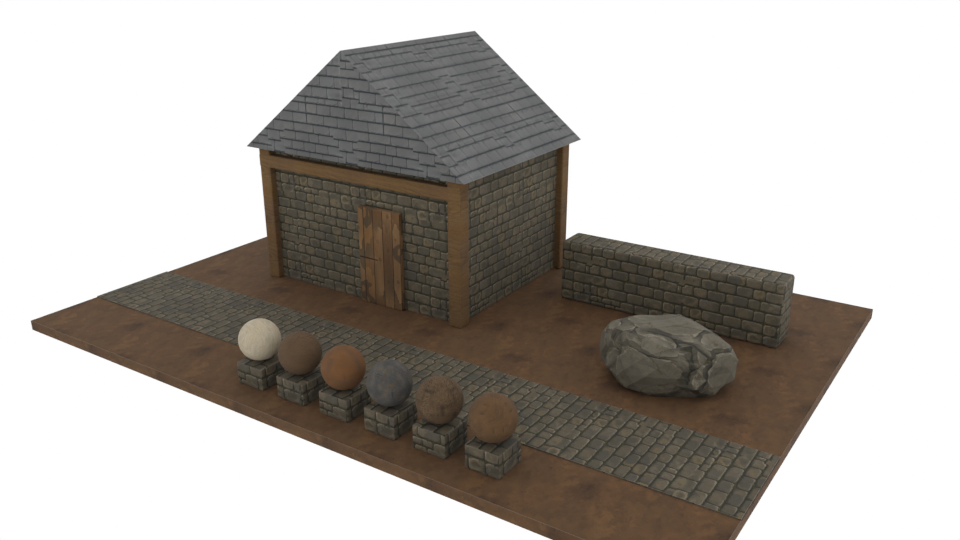
A small test scene lets me judge materials together before they go into the game. The agent receives the selected textures and the process for using them.
Trying both
A shared material library should make consistency easier to maintain. Generating fresh textures for every region gives the look more room to drift. The comparison tests those two approaches.
The shared-library approach lets each region select materials and apply a colour grade, a repeatable adjustment to the colours. A gloomy burial ground can use darker stone while a town uses warmer plaster and thatch. The original painted surfaces remain available to reuse.
The alternative generates fresh materials for each region, with its mood included in the request. Both versions use the same small test scene under white light so the materials are easier to judge.
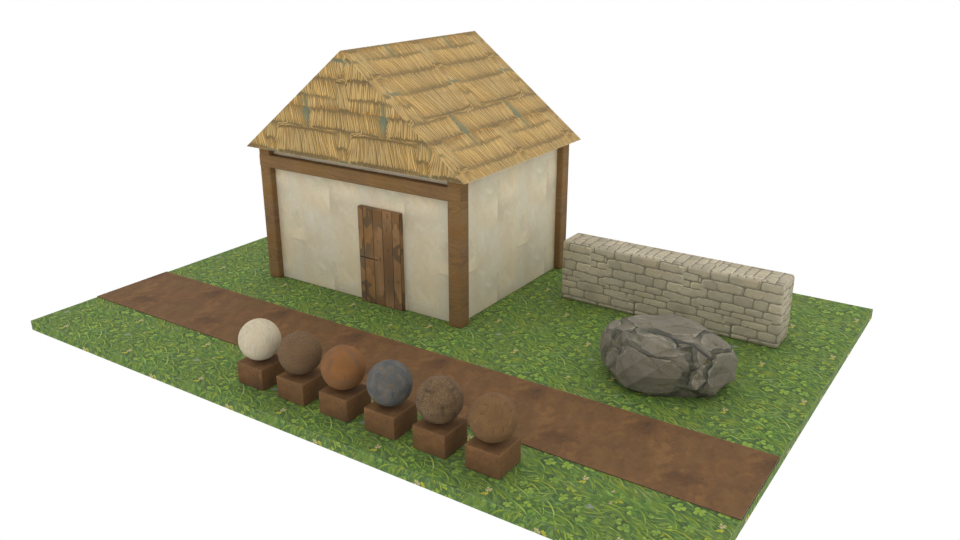
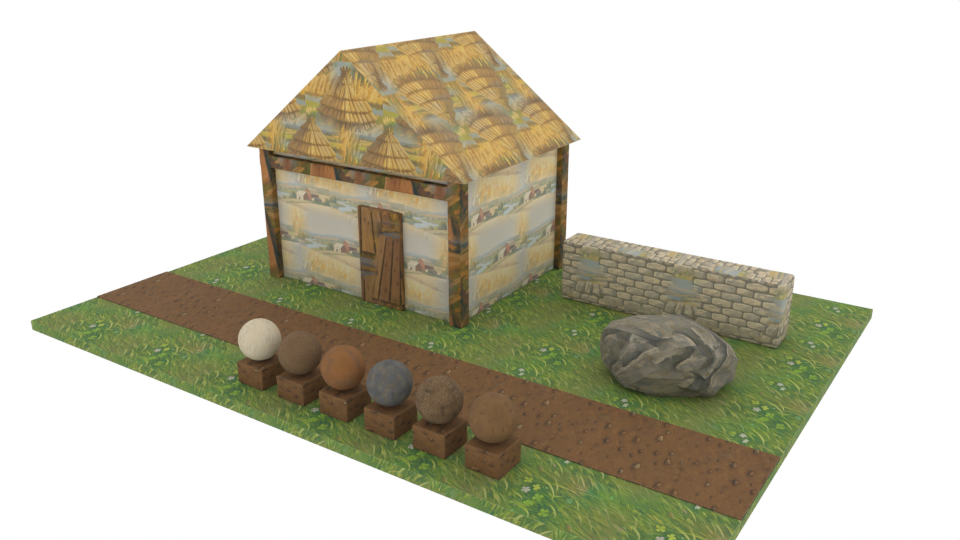
The fresh generations changed roof patterns and wall details, and some surfaces picked up imagery from the regional descriptions. This comparison includes earlier prompt wording that was still being refined. I’m taking the shared-library approach into the next part of the build so regional variation can come from deliberate material choices and colour adjustments.
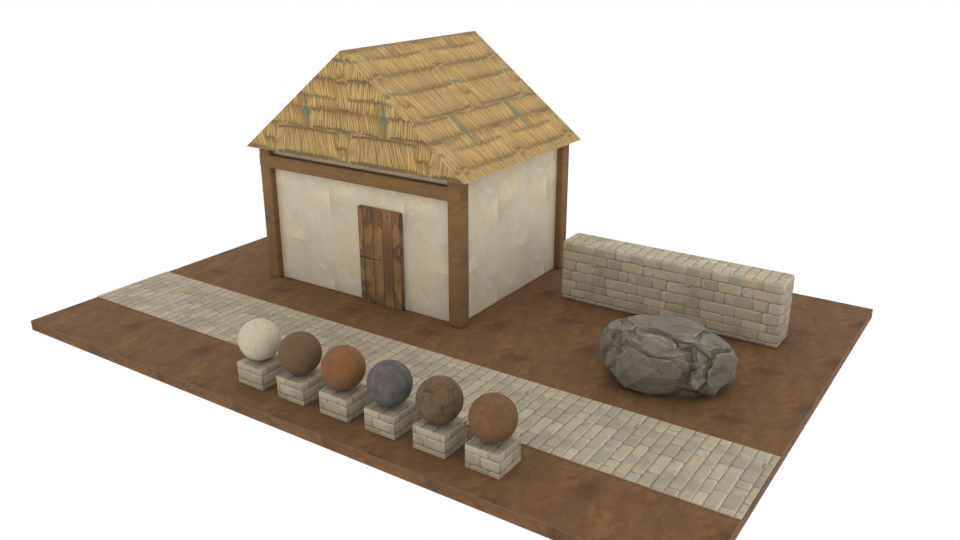
The town and barrow tests show those choices on the same small scene. Different materials and colour adjustments give each place its own mood. How well that holds together across the region still needs to be judged in game.
Room for judgment
Playing in Ironforge, a city in World of Warcraft, I noticed that the siding beside a bridge over lava appeared to reuse the same artwork as the longer panels around the pit. It was stretched to different sizes. I could see that when I focused on it, but it worked while I was playing.
Rowan’s materials need that flexibility. Each kind has a starting scale, with room to stretch or shrink it where it looks right. I don’t want a useful texture rejected just because a measurement says its brushwork is the wrong size.
Plain surfaces need a quieter treatment than stone and thatch. Requests for big, simple shapes gave some plaster and cloth too much pattern. Gentler strokes and less contrast produced calmer candidates within the shared style.
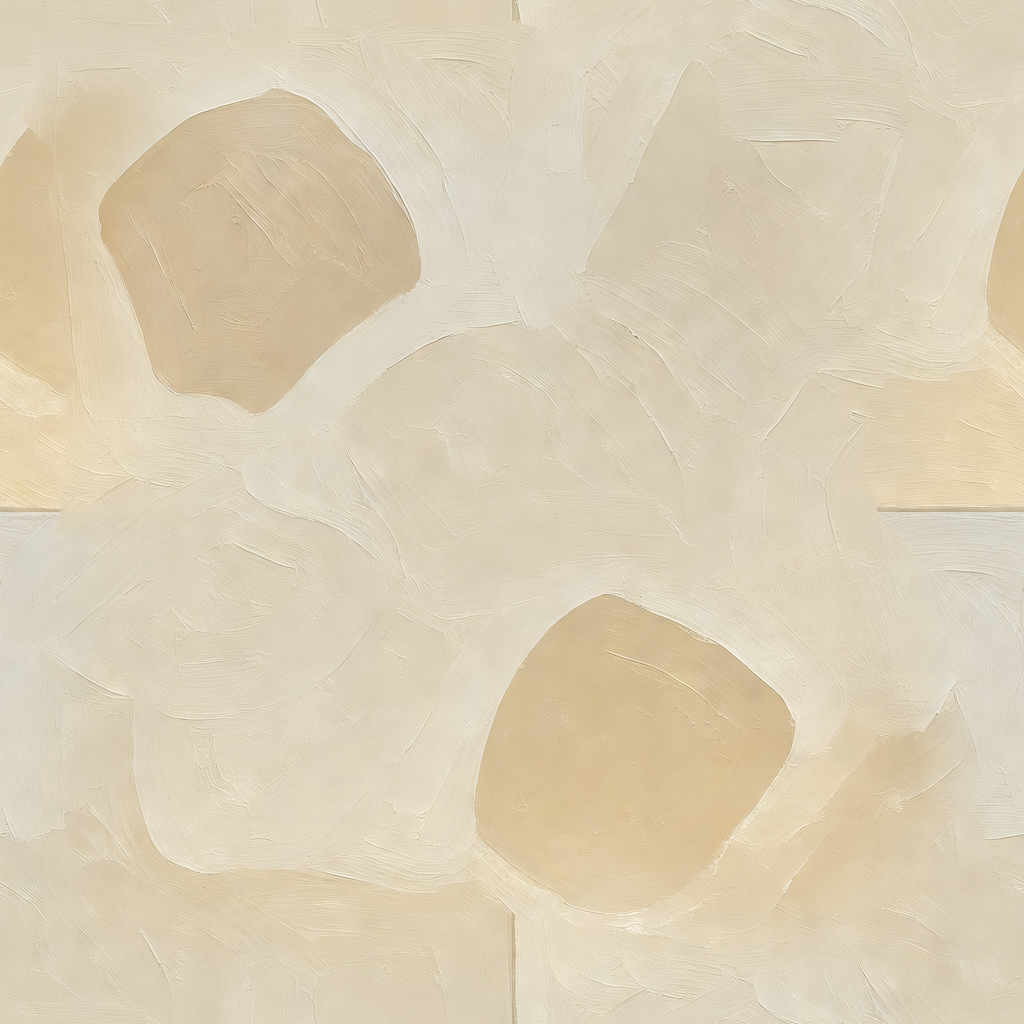
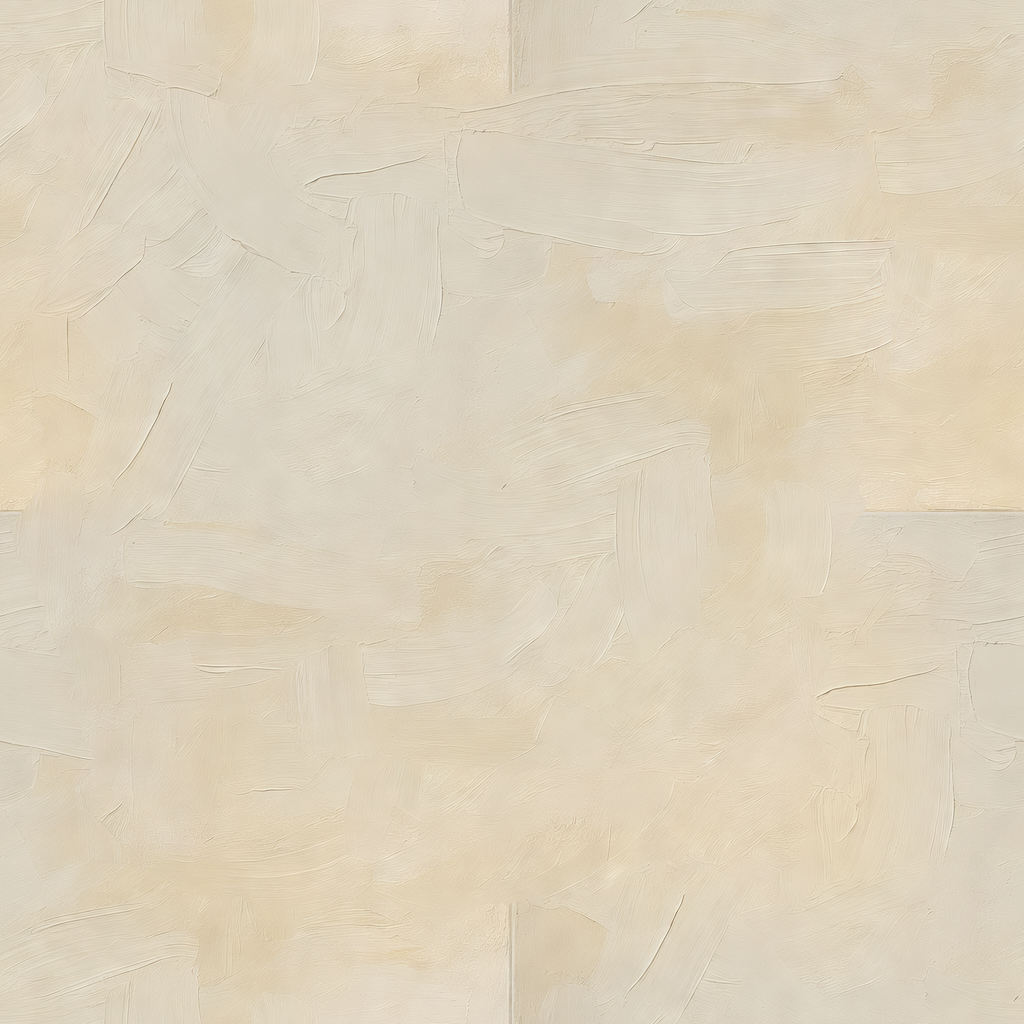
Checks for colour, contrast, fine detail and visible seams help keep the library within its limits. They still passed a plaster experiment that contained a mountain landscape. Every candidate also needs visual review to confirm it depicts the intended material.
Our test setup
The house, wall, rock and ground scene makes the relationship between the surfaces easy to see. If you’re experimenting with generated assets, that’s a manageable place to start: enough materials to cover one object and its surroundings, put together before you generate a whole region. These are the decisions we’re using for this pass.
| Decision | What we’re trying in Rowan |
|---|---|
| Keep fixed | Shared style wording, a palette, and an approved source texture for each material. Plain surfaces use the quieter style. |
| Let regions vary | Material choices from the library and repeatable colour adjustments. Characters and other shared assets can retain their original colours. |
| Allow judgment | Texture scale can change to suit an object. Review whether it looks right in context. |
| Compare together | Repeating surfaces, materials on an object, and several regional versions under comparable lighting. |
| Check by eye | Confirm the image depicts the intended material, even when its colour and seam checks pass. |
For a concrete example, this is the prompt used for the quieter plaster test above. It describes a surface viewed from overhead, with the same framing we use for other materials.
Plaster prompt
whitewashed plaster in warm off-white cream, faint trowel marks and soft mottling, a single unbroken surface, one continuous surface filling the whole frame edge to edge, viewed straight down from directly above, a 2 metre square of it, hand-painted stylised game art with gentle long painterly brush strokes, a quiet low-contrast surface, soft subtle variation, muted earthy colours, flat even lighting with no shadows
Negative prompt (the model's separate field for things to avoid)
text, letters, signature, watermark, border, frame, photograph, photo, photorealistic, realistic, fine grain, noise, perspective, horizon, sky, landscape, trees, road, wheel tracks, floor, room, wall corner, shadows, vignette, tiles, tile grid, squares, checkerboard, sprite sheet, grid, repeated objects, several objects, patches, blotches, camouflage, crackle, cracked pattern, rivets, studs, mottled
Recorded settings: Cosmos3, profile cosmos3-t2i-fp8, 1024 × 1024 pixels, 20 steps, guidance scale (CFG) 4, seed 20261106.
This example needs a generator that exposes the model’s negative-prompt and guidance controls. The wording is specific to our Cosmos3 experiments. Requests for a seamless texture sometimes produced a picture of tiles, so we described one continuous surface and handled the repeating edges afterward.
The finished image also goes through lighting correction, seam processing and colour adjustment toward its palette colour. Pasting the prompt alone won’t reproduce those steps. Keep the generated image, its settings and the processed version together so you can reuse an accepted material without asking the model to paint it again.
Building outward
The agent building the game has received the library of 39 materials and the process for using it. Those materials pass the colour and surface checks. The larger job is still in progress: applying them across the developing world and seeing how the places, objects and creatures look together while playing.
The next test is whether the library gives those places a coherent feel at the scale of the game. That means walking through the region and judging the materials on the buildings, terrain and creatures they were made for.