Making Monsters That Belong
Creatures, spells and sound in Rowan.
I want Rowan to have its own character, from the creatures you meet to the magic you use. I’m building it as a single-player fantasy RPG with coding agents, with a painted visual style that carries through the world and its inhabitants. The creatures, spell effects and sounds here are the latest pieces of that world.
Creature animations in Unreal.
The Thornpelt Wolf
I’ve kept our base creature designs and chosen additional members for their families. I want that variety to come through in the creatures themselves, with recognisable fantasy shapes and a painted finish that belongs in Rowan.
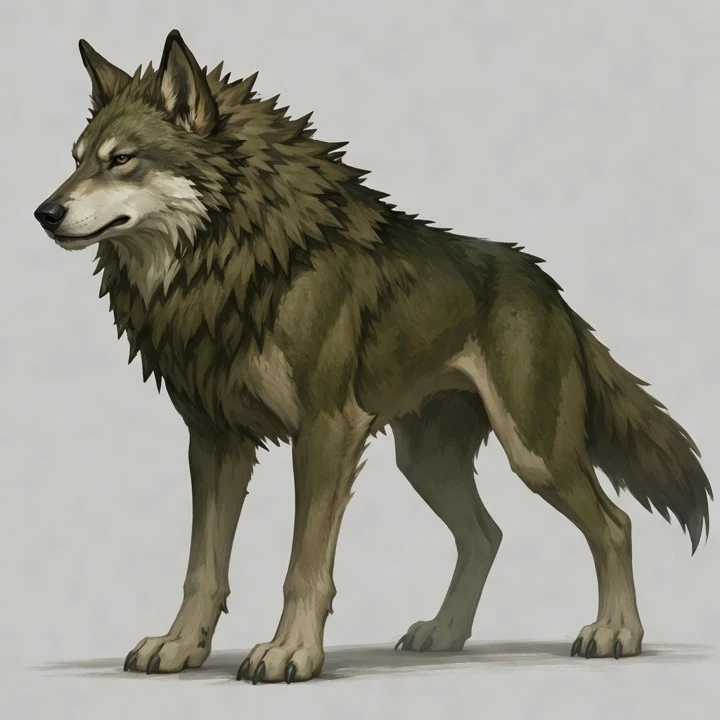
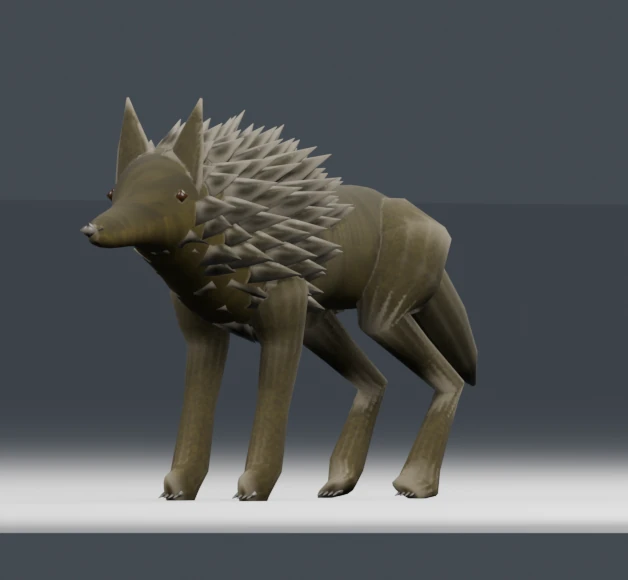
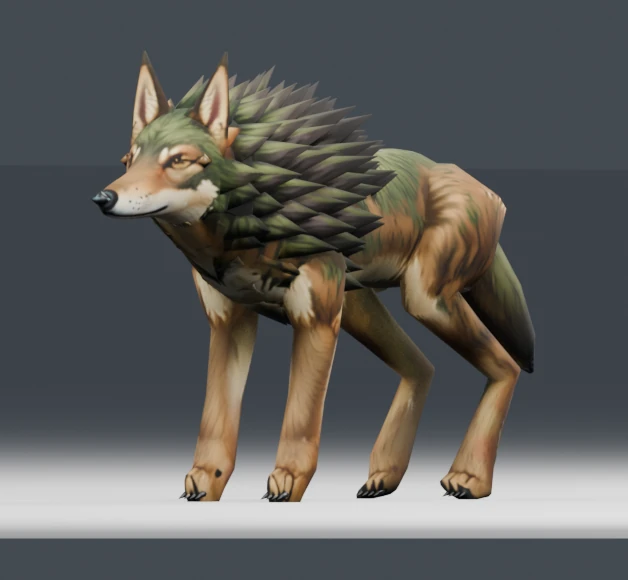
Original and painted coats show the same model from the same camera.
Three Thicket Hares
I also want variety within a creature family. These coats give the Thicket Hare different characters while keeping it recognisably the same creature.
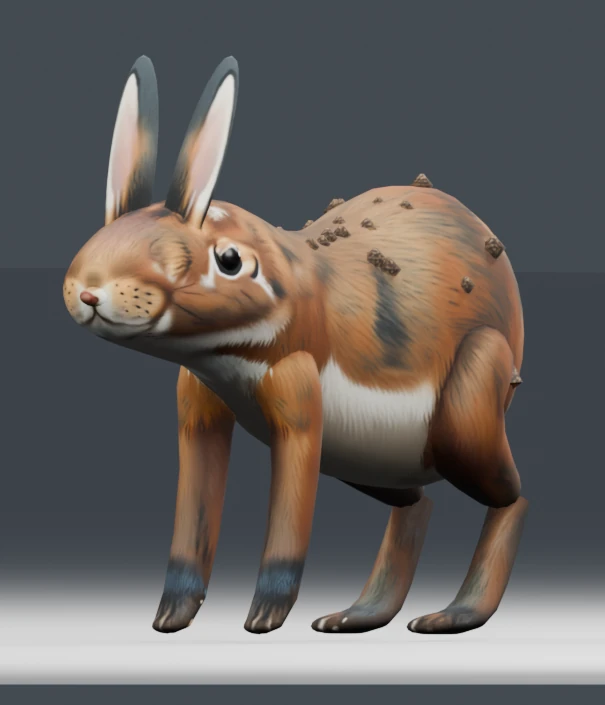
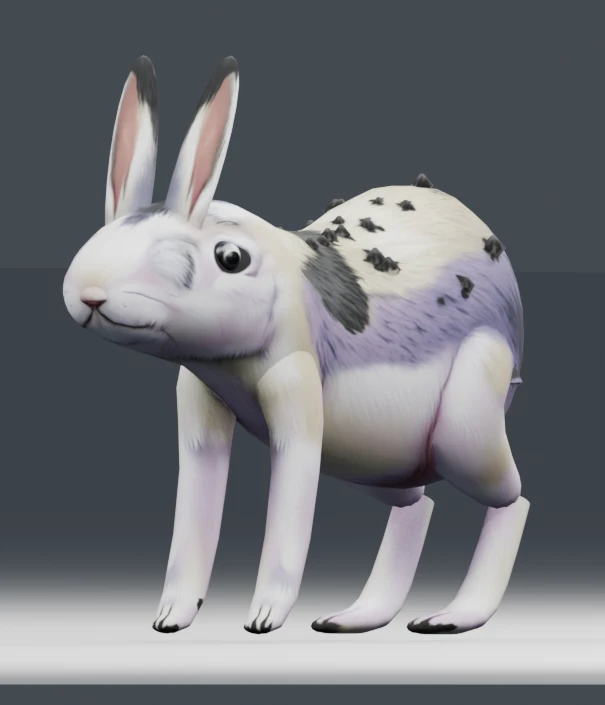
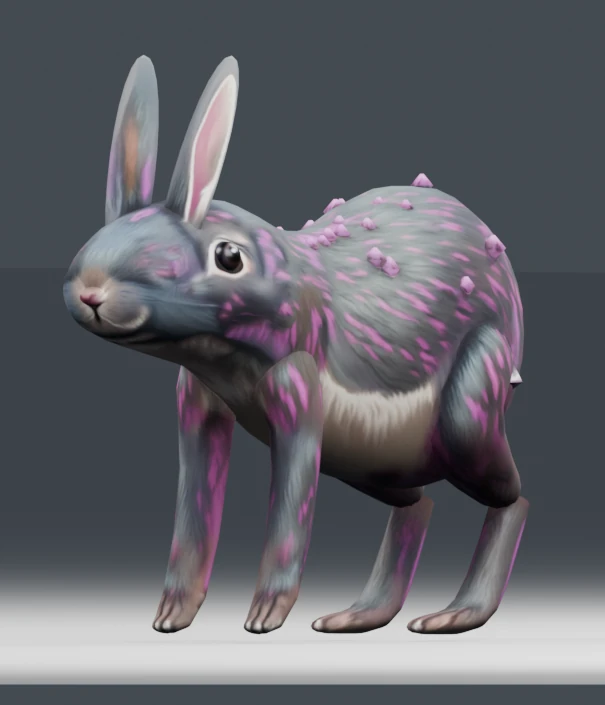
We keep these treatments in a colour-flavour library. A flavour describes relationships between colours and materials, such as a dark back against a pale belly. Each creature family supplies its own material instructions. Fur should still look like fur; shell plates should keep their harder edges. Applying the palette is an art-direction choice, not just changing a tint.
Giving the model a new coat
The useful part of this process is that we can improve an animated creature we already have. An image model, FLUX.2 Klein, edits a render into the appearance we want. TRELLIS.2 then uses the inspected image and the original mesh to make a painted donor: an intermediate model whose surface colour we transfer back to the original creature.
The original keeps its geometry, skeleton and actions. It also keeps the material settings that decide how shiny, metallic, transparent or two-sided a surface is. The new coat supplies colour. That separation matters on creatures with both solid bodies and thin wing membranes.
A spell takes shape
The creatures are one part of Rowan’s painted world. I want the magic the player uses to feel at home alongside them.
Each spell’s effect also needs to make its purpose clear. Ember Dart is an attack; Mend and Ward are healing and protection. Their appearance needs to make those differences apparent.
The timing matters too. Preparing a spell, releasing it and reaching its target need to agree with what the player is doing.
Spell demonstrations in Unreal, with isolated spell sound.
Giving spells a sound
I want the sound and picture to feel like one spell. Preparation should last through the cast, and the release and impact should arrive with the action. I selected the SuperCollider spell sounds for this work.
I’m building a design toolkit for game assets, bringing together ways to shape creatures, develop their painted look, and create spell effects and sound. Each addition gives me more to build with as Rowan grows, and more room to give its world a character of its own.